Feb 16th, 2026
By Satish Reddy | Reading time 5 mins
The Uncomfortable Truth About Why Nonprofit Fundraising Events Underperform
Nonprofit fundraising events look successful on the surface: sold-out tables, smiling volunteers, photos for social media.
But behind closed doors, many nonprofit leaders quietly wonder why the numbers don’t add up.
Why did months of planning result in razor-thin margins?
Why didn’t new attendees become donors?
And why does every event feel harder than the last?
The uncomfortable truth is this: most nonprofit fundraising events don’t fail because of passion or effort; they fail because of outdated strategy, poor systems, and invisible friction happening long before event day.
Let’s unpack what’s really going wrong and what small to mid-sized nonprofits can do differently.
Download the 1-Hour Weekly Engagement Plan
Why Nonprofit Fundraising Events Underperform (Even When Attendance Is High)
Nonprofit fundraising is no longer just about throwing a great event. Today’s donors expect relevance, personalization, and follow-up. When those elements are missing, even well-attended events quietly underperform.
The Core Problem: Events Often Prioritize Transactions Over Relationships
Many organizations still approach fundraising events as isolated moments:
- Sell tickets
- Host the event
- Say thank you
- Move on
This mindset ignores the most valuable part of nonprofit fundraising: what happens before and after the event.
Without the right donor management for nonprofits, events become expensive one-off transactions instead of long-term relationship builders.
Pain Point #1: Fragmented Donor Data Kills Momentum
Small and mid-sized nonprofits often juggle spreadsheets, email tools, and disconnected systems.
The result?
- No single nonprofit donor database
- Lost donor history
- Inconsistent communication
- Missed follow-up opportunities
When donor data lives in silos, your team can’t see who attended, who donated, who volunteered, or who’s ready to give again.
This is where a nonprofit CRM system becomes mission-critical.
Pain Point #2: Event Planning Is Manual, Stressful, and Inefficient
Many teams rely on outdated processes for:
- Ticket sales
- Guest lists
- Seating assignments
- Auction tracking
- Donation reconciliation
Without modern fundraising event management software, staff burn out, volunteers get overwhelmed, and errors creep in costing both time and trust.
Pain Point #3: No Real Donor Journey After the Event
Here’s the hardest truth to swallow:
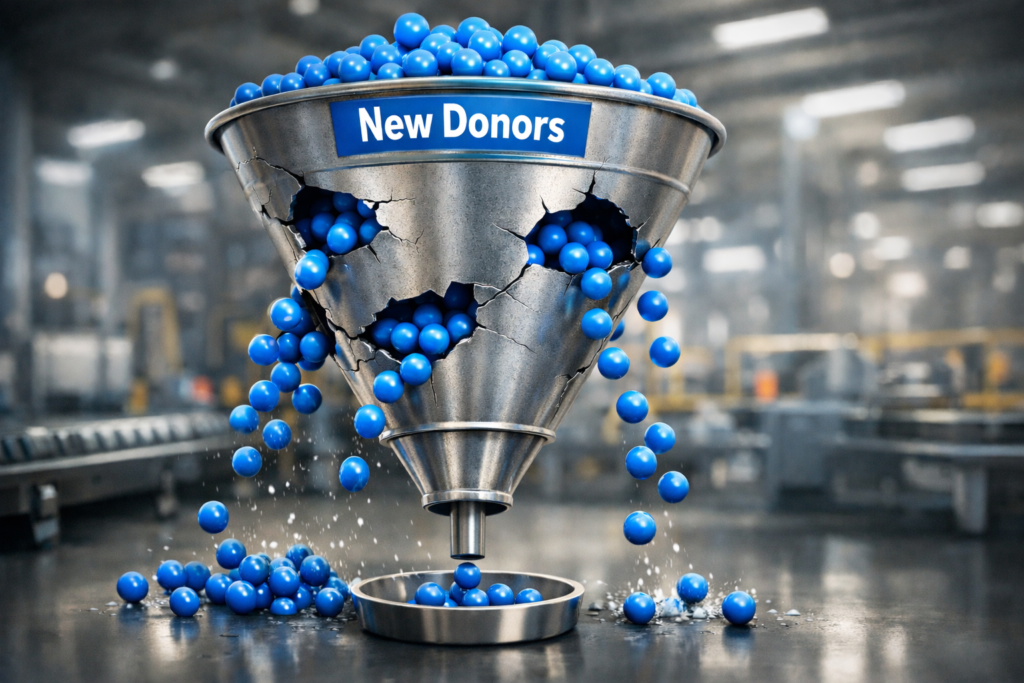
Most nonprofits lose 70–90% of event attendees as future donors.
Why?
Because there’s no structured post-event journey.
Without fundraising CRM tools that support segmentation and automation, follow-up often looks like:
- One generic thank-you email
- No personalization
- No next step
That’s not relationship-building, that’s fundraising leakage.
Pain Point #4: Leadership Can’t See What’s Actually Working
When data is scattered, leadership lacks clarity:
- Which events generate real ROI?
- Which donors upgrade after attending?
- Which outreach drives repeat giving?
A centralized nonprofit CRM system paired with nonprofit fundraising software turns events into measurable, improvable strategies not guesses.
A Better Way: Turning Fundraising Events Into Long-Term Revenue Engines
Here’s a step-by-step checklist nonprofit leaders can use to reverse underperformance.
Nonprofit Fundraising Event Optimization Checklist
Step 1: Centralize All Donor and Event Data
- Implement a unified nonprofit donor database
- Track attendance, giving history, and engagement in one place
- Eliminate duplicate records and manual spreadsheets
Step 2: Use Fundraising Event Management Software
- Streamline ticketing and registrations
- Track donations in real time
- Reduce staff workload and event-day chaos
Step 3: Segment Attendees Immediately After the Event
Using your nonprofit CRM system:
- First-time attendees
- Past donors who attended
- High-capacity prospects
- Volunteers and sponsors
Each group needs a different message and next step.
Step 4: Automate Smart Follow-Up
Leverage nonprofit event fundraising tools to:
- Send personalized thank-you messages
- Share impact stories tied to the event
- Invite donors into monthly giving or next engagement opportunities
Step 5: Measure What Matters
With fundraising CRM tools, track:
- Cost per dollar raised
- Donor retention post-event
- Upgrade rates
- Lifetime donor value
Data turns intuition into strategy.
The Real Truth About Nonprofit Fundraising Events
Events don’t fail because your mission isn’t compelling.
They fail because systems aren’t built to support modern nonprofit fundraising.
When donor relationships are treated as long-term investments and supported by the right technology events stop being exhausting fundraisers and start becoming growth engines.
How Aha Impact Transforms Your Events into Revenue Engines
Events don’t fail because your mission isn’t compelling; they fail because your systems aren’t built to support modern fundraising. Aha Impact is designed to bridge this gap, ensuring that every attendee becomes a potential long-term partner in your mission.
Why Growing Nonprofits Choose Aha Impact:
- No Per-Record Pricing: Add your donors, volunteers, and prospects without fear. Our pricing is tied to your team size, not your list size so you’re never penalized for growing your community.
- Unified Donor & Event Management: See the complete supporter journey. Identify which volunteers attended your gala and are ready to become major donors through our Fundraising Snapshot.
- Automated Donor Journeys: Stop the “fundraising leakage.” Use predefined reports (15–20+) to instantly identify lapsed donors or fresh supporters and trigger personalized follow-ups.
- Zero-Hassle, Zero-Cost Migration: We handle the data clean-up, mapping, and import for you at no cost, typically getting you live in just 5 days.
Ready to stop the end-of-month scramble and start growing your community?
Mastering Strategic Fundraising for Nonprofits in 2026
High-performing nonprofits no longer rely on a single approach to revenue. Instead, they intentionally separate and strengthen two complementary strategies:
1. Development teams focus on high-touch relationships with major donors
2. Marketing teams build scalable systems that engage and retain smaller and mid-level donors