How Can Small and Mid-Sized Nonprofits Avoid Over-Automating Donor Relationships with AI in Nonprofit Fundraising?

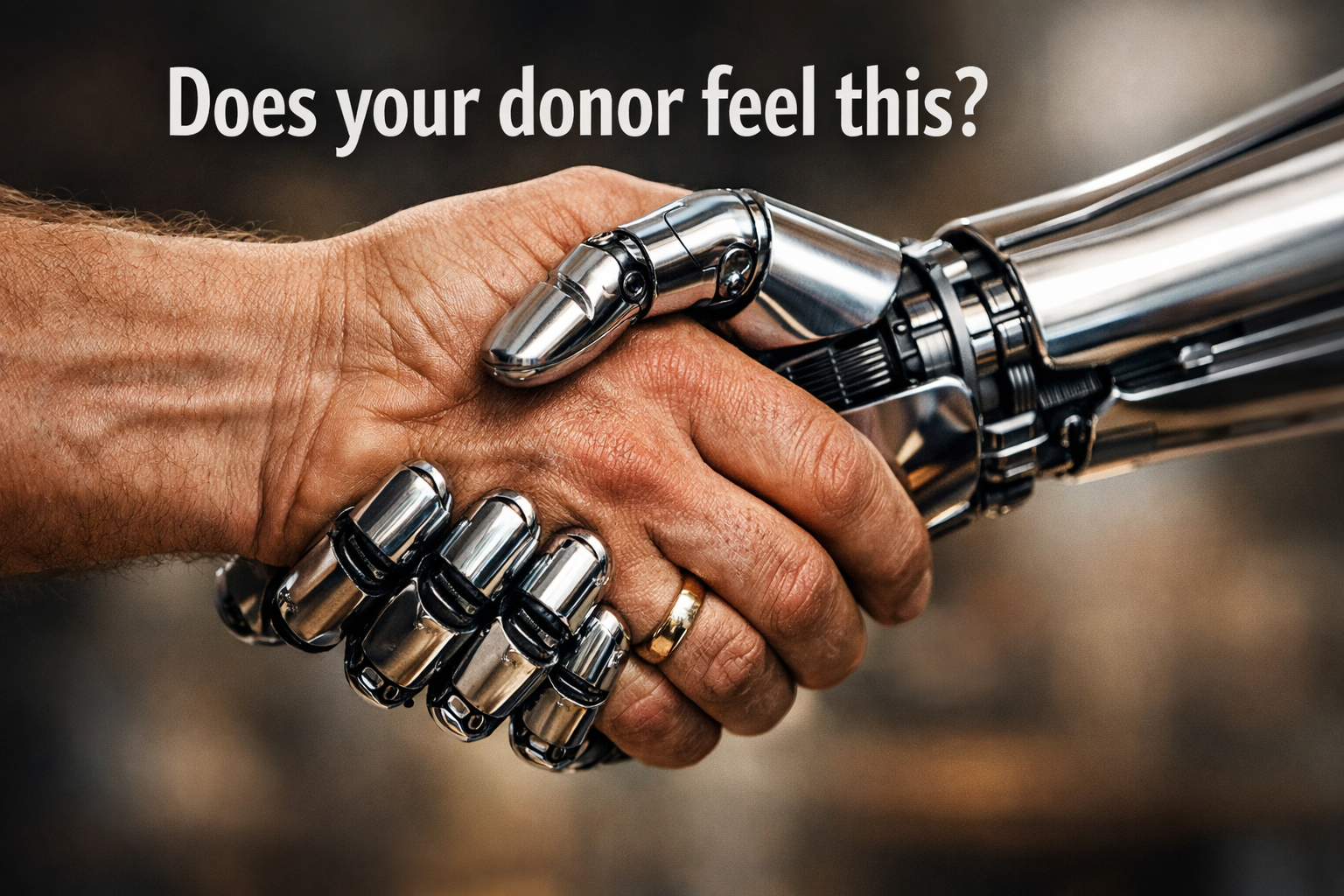
For many small and mid-sized nonprofits in the USA, AI in nonprofit fundraising feels like a lifesaver. It drafts emails, segments donors, and automates follow-ups. But here’s the uncomfortable truth: over-automating donor relationships can slowly erode trust. If donors begin to feel processed instead of valued, retention and loyalty suffer.
Here’s how to recognize and prevent that shift.
Signs Your Nonprofit May Be Over-Automating
Automation should support donor relationships not replace them.
Are all thank-you messages fully automated?
Automated thank-you emails are efficient, but major gift thank you and long-time donor acknowledgments should always feel personal. Relationship driven gratitude builds trust in nonprofit fundraising.
Are major donors in the same workflow as small donors?
AI-powered donor segmentation is powerful. But when high value donors receive the same automated sequences as first-time givers, intimacy is lost.
Has personal outreach decreased?
If AI tools now handle most communication and staff rarely make calls or send handwritten notes, over-automation may be happening.
Smart Use of AI in Nonprofit Fundraising
The goal is balance not elimination of automation.
What should be automated?
Use artificial intelligence in nonprofits for:
– Data analysis
– Predictive donor scoring
– Email scheduling
– Drafting first versions of fundraising copy
These tasks increase fundraising efficiency without harming relationships.
What should remain human?
Keep these touchpoints personal:
– Major gift thank-yous
– Milestone recognition
– Lapsed donor outreach
– Crisis communication
AI should identify opportunities. Humans should build the connection.
Protecting authentic donor relationships is critical for small nonprofits that compete on closeness, not scale.
To explore the full framework for balancing automation and human connection, revisit the main blog and evaluate where your nonprofit may need to recalibrate its AI strategy.