How can nonprofit leaders know when their systems are hurting donor engagement and growth?

Many nonprofit leaders sense that something is not working, but they may not immediately blame their systems. Campaigns take too long to launch. Reports feel inconsistent. Donor follow-up depends on memory. Volunteers and event attendees never become donor prospects. These are not just technology frustrations. They are warning signs that your infrastructure may be limiting donor engagement and growth.
Signs of disconnected nonprofit infrastructure
Fragmented donor context
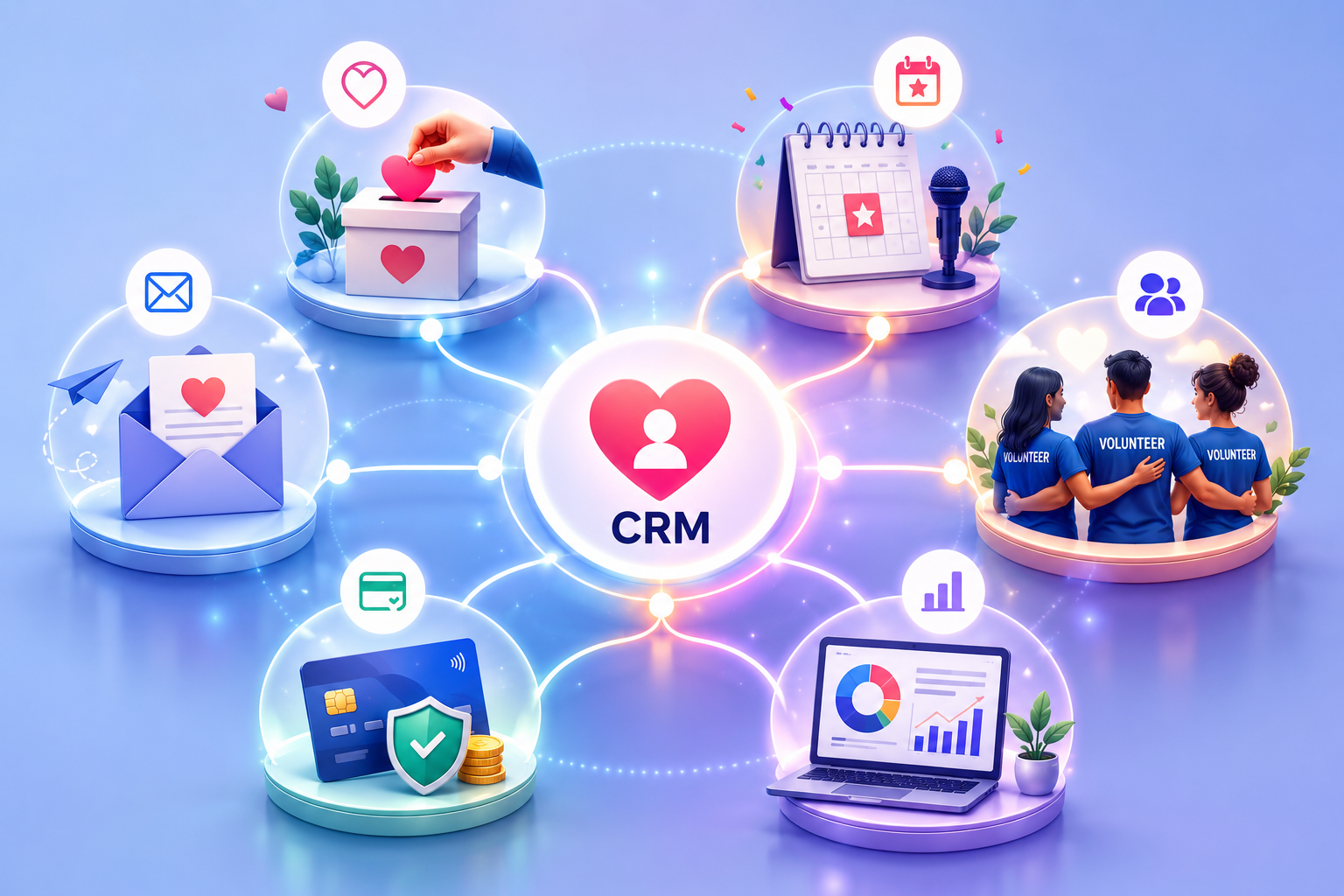
One of the clearest signs of a problem is when your team cannot quickly see a supporter’s full history. If donations live in one place, event participation in another, volunteer activity somewhere else, and email engagement in a separate platform, your team does not have the full picture.
This makes it harder to understand donor intent, personalize outreach, or identify high-potential supporters.
Manual reporting pressure
If your staff spends too much time pulling exports, cleaning spreadsheets, and combining reports from multiple tools, your systems are slowing down your mission. Reporting should help your team act, not drain hours from already busy staff.
This is where nonprofit operational efficiency technology becomes valuable. It helps transform reporting from a manual burden into a practical decision-making resource.
Missed donor opportunities
Disconnected systems can hide strong donor signals. A volunteer who attends multiple events, opens campaign emails, and supports your programs may be a strong donor prospect. But if that information is not connected, your team may never see the opportunity.
Modern connected nonprofit systems help reveal these patterns so staff can follow up with the right message at the right time.
Inconsistent supporter communication
When teams do not have shared visibility, donors may receive messages that do not match their history. A loyal donor may get a generic first-time appeal. A recent event attendee may not receive a relevant follow-up. A lapsed donor may be overlooked entirely.
This inconsistency weakens trust and makes engagement feel less personal.
Infrastructure gaps that affect fundraising
Weak nonprofit CRM integration
Poor nonprofit CRM integration often shows up as duplicate entry, missing engagement history, delayed updates, and incomplete donor records. Even if tools are technically connected, they may not support a smooth workflow.
The real question is not whether tools connect on paper. It is whether your team can use the connected data to make better fundraising and stewardship decisions.
Limited nonprofit fundraising infrastructure
If your nonprofit fundraising infrastructure cannot connect giving history, recurring donations, pledges, events, campaigns, and follow-up tasks, your team may struggle to manage donor relationships at scale.
This can lead to delayed thank-yous, missed upgrade opportunities, weak segmentation, and less effective appeals.
Incomplete nonprofit data integration strategy
A strong nonprofit data integration strategy starts with clarity. Leaders need to know which data matters, where it lives, who uses it, and how it should support donor engagement.
Without that clarity, organizations may add more tools without solving the real issue: disconnected workflows.
Poor nonprofit tech stack optimization
A nonprofit tech stack may look impressive but still fail the team. If staff members avoid the system, rely on side spreadsheets, or cannot trust the reports, the tech stack is not optimized.
Nonprofit tech stack optimization should make daily work easier, reporting clearer, and donor engagement more consistent.
Practical steps toward connected donor journeys
Current system audit
Start by reviewing how donor, volunteer, event, campaign, and payment data currently move through your organization. Look for duplicate entry, manual exports, missing records, and unclear ownership.
This audit helps you see whether your issue is the tool itself, the setup, the workflow, or the data structure.
Module and integration review
Not every nonprofit needs every feature immediately. But leaders should understand which modules and integrations are essential for their goals. Donor management, volunteer management, event management, email marketing, and payment tools should support one connected supporter view.
This is especially important for small and mid-sized nonprofits trying to grow without adding unnecessary complexity.
Data quality discipline
Even the best infrastructure depends on clean, well-structured data. Your team needs consistent naming, accurate records, clear donor stages, and regular data hygiene practices.
Technology can connect information, but your organization still needs discipline around how that information is entered, managed, and used.
Donor journey alignment
The final step is aligning your systems around the donor journey. A supporter’s giving, volunteering, event attendance, and communication history should help guide what happens next.
That is the heart of a unified donor journey nonprofit strategy: using connected data to make every interaction more timely, relevant, and relationship-focused.
To go deeper into how nonprofits can move from disconnected systems to connected donor journeys, revisit the main blog and use it as a guide for evaluating your current infrastructure.