What Should Small and Mid-Sized Nonprofits Look for in the Best Nonprofit CRM Software?

For many U.S. nonprofit leaders, the CRM conversation starts when something goes wrong: a loyal donor lapses, a board report takes hours, or an engaged volunteer is never invited into the donor journey. Choosing the best nonprofit CRM software is not just about buying a database. It is about helping your team manage relationships, protect donor trust, and use limited staff time wisely.
Essential CRM Priorities for Lean Nonprofit Teams
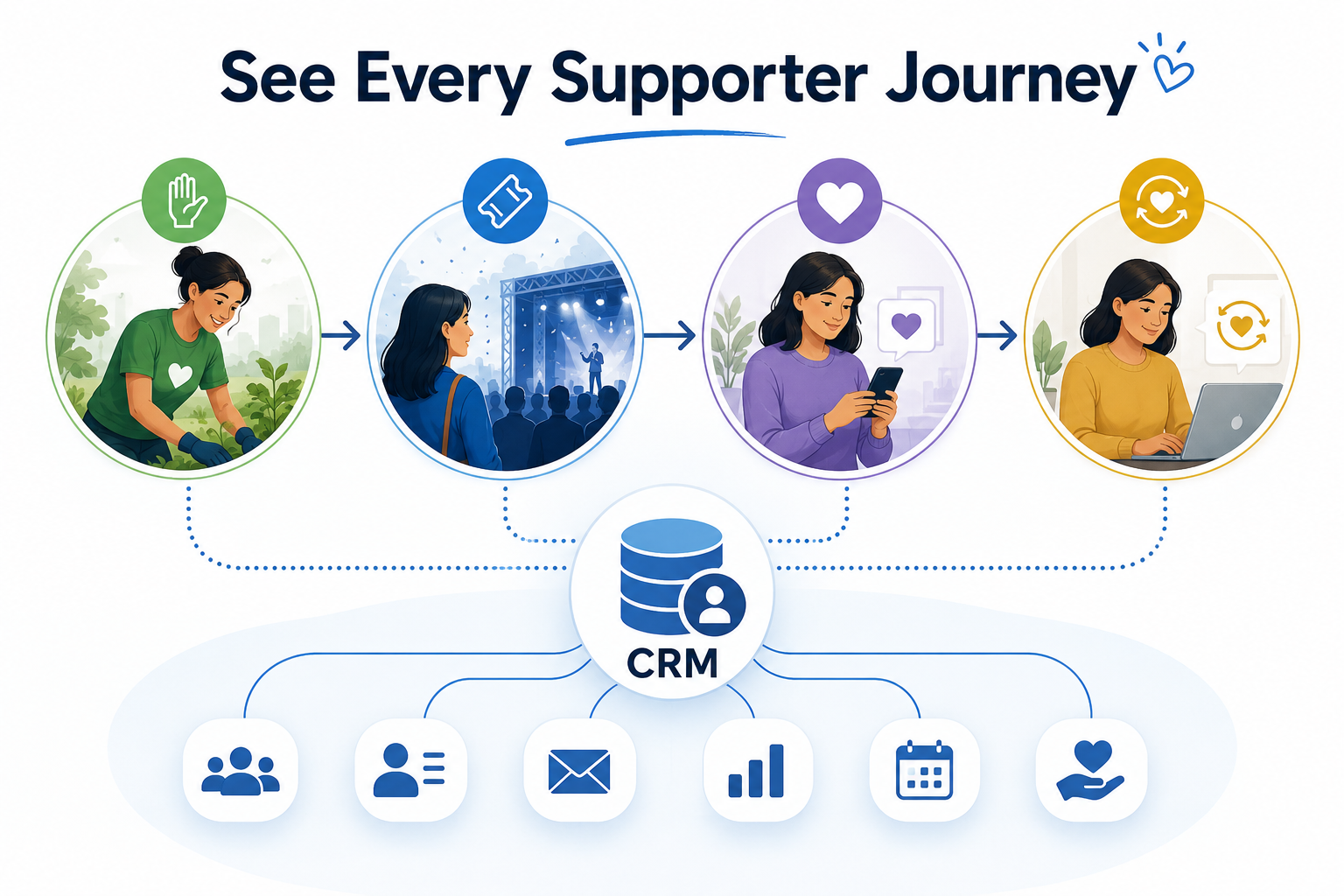
Complete Supporter Visibility
A strong nonprofit CRM should help your team see donors, volunteers, prospects, event attendees, sponsors, and board relationships in one place. Small and mid-sized nonprofits often operate with lean development teams, so scattered data can quickly turn into missed opportunities.
The need for better visibility is especially important now. Giving USA reported that U.S. charitable giving reached an estimated $592.5 billion in 2024, a record in current dollars, but growth across the sector does not mean every organization is seeing stronger donor participation. That makes it more important for nonprofits to know who is giving, who has stopped giving, who is engaged, and who may be ready for deeper involvement.
Donor Management That Supports Retention
The right donor management software for nonprofits should help staff quickly identify lapsed donors, recurring donors, first-time donors, major contributors, and supporters who need follow-up. This is where CRM software becomes more than an administrative tool.
Fundraising Effectiveness Project data for 2024 showed that total dollars increased, but donor counts declined by an estimated 4.5% and donor retention declined by 2.6% compared with the previous year. For nonprofit executives and development directors, that is a clear warning: revenue can look stable while the donor base quietly weakens. A good nonprofit donor database software platform should make those patterns easier to spot before they become serious revenue problems.
Practical Reporting for Everyday Decisions
Many CRM platforms promise dashboards, but small nonprofits need reports that answer real fundraising questions. Who gave last year but not this year? Which donors are consistently giving? Which event attendees have never donated? Which volunteers are deeply engaged but not yet part of the donor journey?
The best fundraising CRM software should reduce the time spent building manual reports and give leaders faster answers. This matters because nonprofit teams are already under pressure. The National Council of Nonprofits has documented how workforce shortages can lead to longer waitlists, reduced services, and even eliminated programs when organizations cannot hire enough staff to meet community needs. In that environment, every hour spent cleaning spreadsheets is an hour taken away from mission delivery and relationship-building.
Better Evaluation Criteria Before Choosing a CRM
Ease of Use for the Whole Team
A CRM should not only work for the most technical person in the office. It should make sense to fundraisers, executive directors, volunteer coordinators, operations staff, and board-facing leaders. If the platform is too difficult to use, people will return to side spreadsheets and private notes.
When evaluating CRM software for nonprofits, ask vendors to show common nonprofit scenarios, not just polished dashboards. Ask how quickly your team can find a donor’s giving history, segment lapsed donors, export a board report, or assign a follow-up task.
Connected Donor, Volunteer, and Event Data
For many U.S. nonprofits, the next best donor may already be connected to the organization. They may be a volunteer, a gala attendee, a campaign participant, or someone who regularly opens emails but has not yet given.
That is why nonprofit relationship management software should help teams understand engagement beyond donations alone. When giving history, volunteer participation, event attendance, and communication activity are connected, staff can move from guessing to informed outreach.
Pricing That Does Not Punish Growth
Small and mid-sized nonprofits should pay close attention to how a CRM is priced. Some systems become more expensive as contact records increase, which can make organizations hesitant to add prospects, volunteers, or community supporters.
A growth-friendly nonprofit database software model should encourage organizations to build their community, not penalize them for doing so.
Conclusion
The best nonprofit CRM software is the one your team will actually use to strengthen relationships, reduce manual work, and make smarter fundraising decisions. For small and mid-sized nonprofits, the right system should bring supporter data together, make donor retention easier to manage, and give leaders the clarity they need to act sooner.
For a deeper breakdown of CRM features, pricing questions, donor tracking needs, and selection criteria, Read The Full Blog