How Can the Best Nonprofit CRM Software Help Nonprofits Improve Donor Retention?

Donor retention is where many nonprofit growth plans succeed or fail. A new donor may give once, attend one event, or respond to one campaign, but the real value comes from what happens next. For small and mid-sized nonprofits in the United States, the best nonprofit CRM software should help staff follow up with more intention, personalize outreach, and prevent good supporters from quietly disappearing.
Donor Retention Starts With Better Timing
Lapsed Donor Awareness
A strong donor tracking software system should help nonprofits find lapsed donors without manually comparing exports from different tools. These are donors who gave in the past but have not given again within a meaningful time period.
This matters because donor participation is under pressure. The Fundraising Effectiveness Project reported that although 2024 dollars increased, donor numbers and retention rates both declined. For a small nonprofit, that decline may show up as fewer familiar names in the year-end campaign, weaker response from past supporters, or more pressure on a small group of major donors.
Smarter Follow-Up After Key Moments
A donor’s first gift, event attendance, volunteer shift, or campaign click can all be signals of interest. But if those signals are spread across different systems, staff may not see them in time.
A useful nonprofit contact management software platform should help teams track those moments and turn them into timely follow-up. That might mean thanking a first-time donor, inviting a volunteer into a giving conversation, or checking in with a recurring donor whose engagement has slowed.
More Personal Stewardship
Many donors stop giving because they do not feel connected to the impact of their gift. Good charity CRM software helps nonprofits move beyond generic communication by giving staff context: giving history, interests, communication activity, event participation, notes, and relationship history.
When a development director can see the full relationship, the next message feels more relevant. Instead of sending the same appeal to every supporter, the organization can speak to what that donor has actually done and why their continued support matters.
Manual Work Reduction Supports Better Fundraising
Fewer Spreadsheets and Side Systems
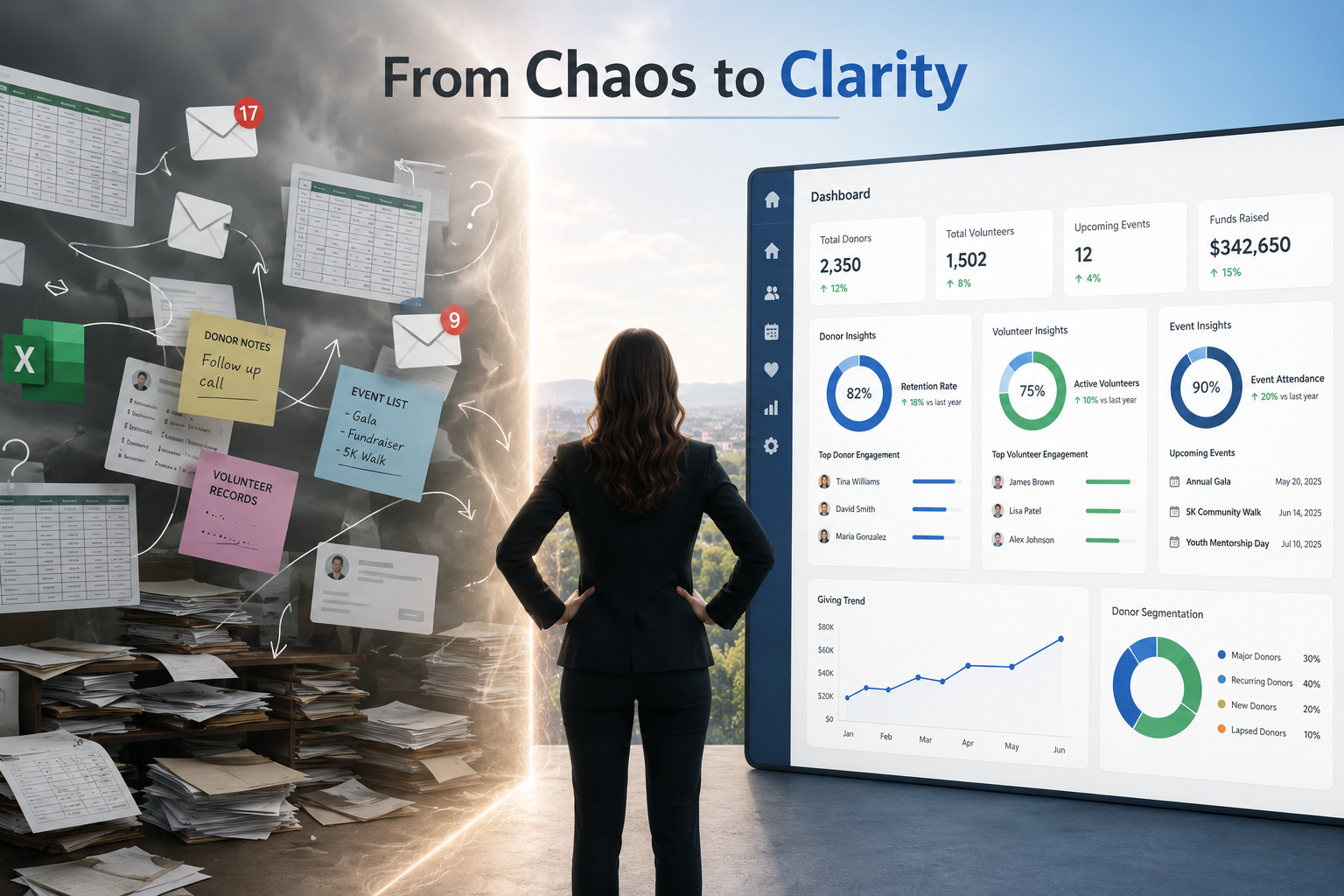
Manual work is more than an inconvenience. It creates delays, errors, and blind spots. When donor records, event registrations, volunteer activity, and email engagement live in separate places, staff spend too much time piecing together the story.
The National Council of Nonprofits has warned that workforce shortages directly affect nonprofits’ ability to serve communities, with reduced services and longer waitlists among the consequences. For lean teams, a CRM that reduces manual work is not a luxury. It is an operating necessity.
Faster Segmentation for Better Campaigns
The right fundraising CRM software should make it easier to segment donors by giving behavior, engagement level, recurring status, event participation, or lapsed donor status. This helps nonprofits avoid one-size-fits-all outreach.
Segmentation is especially useful for small and mid-sized organizations because it helps them focus limited time on the right people. A campaign to first-time donors should not sound the same as a message to long-time recurring supporters or major donor prospects.
Stronger Leadership and Board Reporting
Nonprofit leaders need clear answers when boards ask about donor retention, campaign performance, recurring gifts, and fundraising trends. A strong nonprofit donor database software platform should make those answers easier to produce.
Instead of building reports from scratch, staff should be able to access useful donor and fundraising insights quickly. Better reporting helps leadership make decisions with confidence and gives development teams more time for donor conversations.
Conclusion
The best nonprofit CRM software helps organizations build stronger donor relationships by making the right information easier to find and act on. It supports retention, improves follow-up, reduces manual work, and helps small teams focus on the supporters most likely to deepen their commitment.
For more guidance on choosing a CRM, evaluating donor management features, and understanding what small and mid-sized nonprofits should prioritize, Read The Full Blog.